
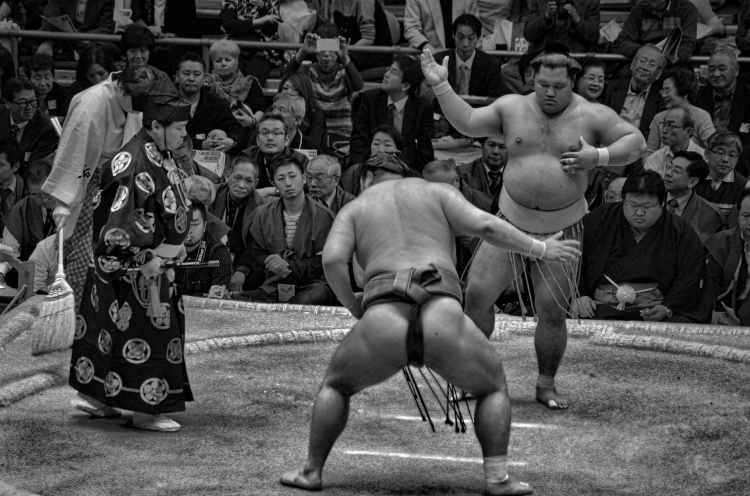
Sumo wrestling, with its origins steeped in Japanese history and Shinto tradition, is more than just a sport; it’s a living testament to ancient virtues that have been passed down through generations. Here are some of the key virtues and principles that underpin this venerable martial art:
- Respect (尊敬, Sonkei): Respect is foundational to sumo wrestling. Wrestlers show respect to their opponents, the referees, and the sport itself through various rituals and practices. This includes the ceremonial entering of the ring (dohyō-iri), the respectful bow before and after matches, and the strict adherence to traditions.
- Purity (清潔, Seiketsu): Sumo is closely associated with Shinto beliefs, which emphasize purity. This is symbolized by the purification of the ring with salt before matches, a practice intended to cleanse the space from impurities and protect the wrestlers from injury.
- Courage (勇気, Yūki): Sumo wrestlers are expected to face their opponents with bravery. This virtue is about more than physical strength; it’s about the inner strength to confront challenges head-on, without fear or hesitation.
- Honor (名誉, Meiyo): Honor plays a significant role in sumo, guiding the conduct of wrestlers both inside and outside the ring. It’s about maintaining one’s reputation through actions that reflect well on oneself, one’s stable, and the sport as a whole.
- Humility (謙虚, Kenkyo): Despite their size and strength, sumo wrestlers are known for their humility. Success in the sport does not just come from winning matches but also from demonstrating grace in victory and dignity in defeat.
- Discipline (規律, Kiritsu): Sumo wrestlers undergo rigorous training regimens and adhere to a strict lifestyle. This discipline extends to their diet, sleep, and behavior, underscoring the importance of self-control and commitment to the sport.
- Strength (力, Chikara): While physical strength is obviously crucial in sumo, this virtue also encompasses mental and emotional fortitude. Wrestlers must develop resilience to push through pain, defeat, and the demanding nature of the sport.
- Tradition (伝統, Dentō): Sumo is deeply rooted in tradition, and its rituals and customs are integral to its identity. Wrestlers partake in centuries-old practices that connect them to the history and spiritual essence of the sport.
These virtues not only define the character of sumo wrestlers but also reflect broader values within Japanese culture. Sumo wrestling is a microcosm of the balance between physical prowess, spiritual discipline, and ethical conduct, making it a unique and enduring symbol of Japan’s cultural heritage.
 sumo.computer